
 Facebook
 X
X
 Pinterest
 Copy Link
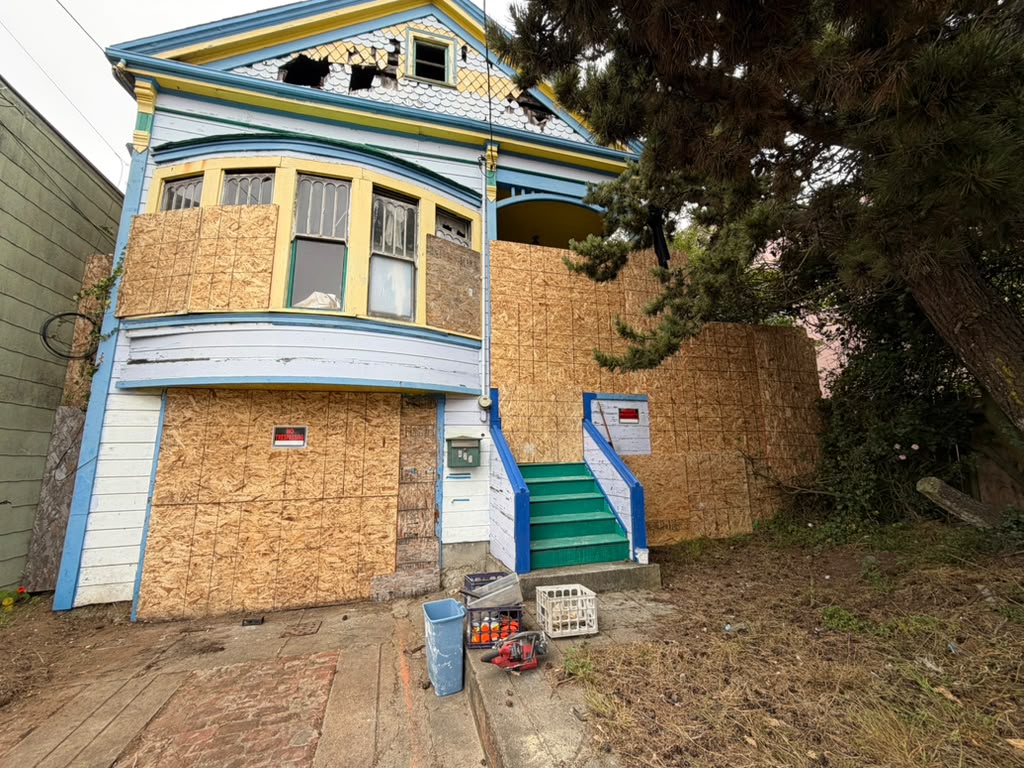
Squatters, Fire Damage and Multiple Offers: Our Ingleside Sale in The SF Standard
Author: Janice Lee | Last Updated: August, 2026
As featured in The San Francisco Standard, September 29, 2026.
Some listings come with a view. This one came with uninvited occupants, a fire-damaged roof and a stack of city violation notices. Our listing at 266 Farallones Street in Ingleside still drew multiple offers and sold for $555,000, about 23% over its $450,000 list price.
The SF Standard’s real estate reporter Emily Landes covered the story, and I was glad to talk about it. Situations like this are more common in San Francisco than most people realize, and the owners caught in them often feel they have no options.
The property
266 Farallones is a detached 1907 home on a roughly 4,400-square-foot lot, listed at $450,000, one of the lowest-priced single-family homes in the city. The elderly owners moved in with family years ago. Unauthorized occupants moved in after they left, and a 2023 fire left major damage, including a large opening in the roof.
The owners had no relationship with the occupants and no funds to repair the house. The sale is a conservatorship sale.
How we approached it
My co-listing agent Pat Rock and I listed the home on September 3. Our approach came down to three things:
- Full disclosure up front. Every buyer knew about the occupants, the fire damage and the notices of violation before we accepted offers.
- Safety first. We advised buyers not to go inside and provided photos instead.
- Pricing for the right buyer. As I told the Standard, “We’re selling it as a property that has some walls and a foundation.” The real value is the detached structure, the large lot and the price. That is exactly why experienced developers competed for it.
The Standard also reported that our efforts to secure the house (adding boards, removing access ladders, calling police) were repeatedly undone. That frustration is real for many owners, and it raises fair questions about how the law protects homeowners in these cases.
If you own a distressed or occupied property in San Francisco
Every situation is different, but a few things hold true:
- Document everything. Keep records of police calls, notices and every step you take to secure the property.
- Talk to a real estate attorney early. Removing unauthorized occupants is a legal process, and the right counsel saves time.
- Don’t assume you must repair first. Investors and developers actively look for properties to rebuild, and an as-is sale can be the fastest way out.
- Disclose fully. Transparency protects you and builds buyer confidence, even with serious issues.
- Work with an agent who has handled hard cases. Pricing, marketing and buyer screening look very different for a distressed property.
This post is general information, not legal advice. Please consult an attorney about your specific situation.
Let’s talk
In 20 years and 660+ transactions, I’ve helped owners, families, trustees and conservators sell properties that others found too complicated. If you own a property that feels stuck: vacant, damaged, occupied or tied up in probate or a trust, I’d be happy to talk confidentially.
We serve clients in English, Cantonese, Mandarin and Spanish.
