
 Facebook
 X
X
 Pinterest
 Copy Link
Can a Buyer Waive an Appraisal in San Francisco?

Can a Buyer Waive an Appraisal in San Francisco?
Author: Ms. San Francisco Real Estate | Last Updated: June, 2026
In today’s competitive San Francisco, CA real estate market, buyers are constantly looking for ways to make their offers stand out. One strategy that often comes up is waiving the appraisal contingency. But is it a smart move?
If you’re working with a real estate agent in San Francisco, CA or searching for the best real estate agent in San Francisco, CA, understanding when and if you should waive an appraisal can make a major difference in your home buying success.
What Does It Mean to Waive an Appraisal?
When a buyer waives the appraisal contingency, they agree to proceed with the purchase regardless of the appraised value of the home.
Normally:
- A lender requires a home appraisal San Francisco CA
- If the home appraises below the purchase price, the buyer can renegotiate or walk away
When waived:
- The buyer accepts the risk
- They must cover any gap between appraised value and purchase price
Why Buyers Waive Appraisals in San Francisco
The San Francisco real estate market is known for:
- High demand and low inventory
- Competitive bidding wars
- Strong interest in San Francisco homes for sale
To compete, buyers may waive contingencies, including appraisal, to make their offer more attractive to sellers.
Common Scenarios:
- Multiple offers on San Francisco houses for sale
- Sellers favoring clean, fast deals
- Buyers competing with cash offer San Francisco CA home investors
Risks of Waiving an Appraisal
While waiving an appraisal can strengthen your offer, it comes with significant risks, especially in San Francisco CA real estate.
1. Paying Above Market Value
Without a formal real estate appraisal San Francisco California, you could overpay for a property.
2. Larger Cash Requirement
If the home appraises low, lenders will only finance based on appraised value. You must cover the difference.
3. Financial Strain
Unexpected out-of-pocket costs can impact your budget, especially for first-time buyers.
When Waiving an Appraisal Might Make Sense
A San Francisco experienced real estate agent may recommend waiving an appraisal in specific situations:
- You’re making a strong, competitive offer
- You have sufficient cash reserves
- You fully understand the San Francisco home value range
- You’re buying in a high-demand neighborhood
This is often more common in luxury or investment segments of San Francisco real estate.
Smart Alternatives to Waiving Completely
Instead of fully waiving the appraisal, many buyers use strategic options:
• Appraisal Gap Coverage
Agree to cover a certain amount if the appraisal comes in low.
• Partial Waiver
Limit your risk by setting a maximum gap you’re willing to pay.
• Stronger Offer Terms
Increase your down payment or offer flexibility in closing timelines.
A top real estate agent in San Francisco CA can help structure these strategies effectively.
The Role of a Real Estate Agent
A San Francisco real estate agent with a proven track record is essential when considering appraisal decisions.
They help you:
- Analyze comparable sales
- Understand San Francisco real estate trends
- Avoid overbidding
- Negotiate favorable terms
If you’re searching for a San Francisco realtor near me, choose someone who understands both market data and risk management.
Market Trends in 2026
In 2026, San Francisco real estate trends show:
- Continued competition for desirable properties
- Increased use of waived contingencies
- More buyers exploring San Francisco investment properties
- Growth in cash home buyers San Francisco activity
This environment makes appraisal strategies even more important.
Home Buying Tips in San Francisco
If you’re planning San Francisco home buying, keep these tips in mind:
- Get pre-approved before making offers
- Understand your financial limits
- Work with a licensed real estate agent in San Francisco CA
- Consider a professional certified appraiser San Francisco CA before waiving contingencies
- Evaluate long-term value, not just purchase price
Selling Perspective: Why Sellers Prefer Waived Appraisals
From a seller’s standpoint, waived appraisals reduce uncertainty.
Sellers looking to:
- “Sell house fast San Francisco CA”
- “Sell house as-is San Francisco CA”
- Attract San Francisco CA home buyers
often prefer offers without appraisal contingencies because they:
- Minimize delays
- Reduce risk of renegotiation
- Increase deal certainty
Build Authority & Industry Trust
To stay informed and strengthen your real estate strategy, explore:
- National Association of Realtors
- Appraisal Institute
Engaging with these resources improves your understanding of San Francisco real estate resources and market best practices.
Final Thoughts
So, can a buyer waive an appraisal in San Francisco? Yes, but it’s not always the right move.
In a fast-paced San Francisco CA real estate market, waiving an appraisal can help you win a deal, but it also increases financial risk. The key is making an informed decision with guidance from a San Francisco real estate agent who knows the market.
FAQs
1. Is waiving an appraisal common in San Francisco?
Yes, especially in competitive markets with multiple offers.
2. What happens if I waive the appraisal and the value is lower?
You must cover the difference between the appraised value and purchase price.
3. Can I still get a loan if I waive the appraisal?
Yes, but the lender will only finance based on the appraised value.
4. Is waiving an appraisal risky?
Yes. It can lead to overpaying and higher out-of-pocket costs.
5. Should first-time buyers waive an appraisal?
Generally, it’s not recommended unless you fully understand the risks and have financial flexibility.
How Appraisal Gaps Affect San Francisco Buyers in 2026

How Appraisal Gaps Affect San Francisco Buyers in 2026
Author: Ms. San Francisco Real Estate | Last Updated: June, 2026
Buying a home in San Francisco, CA, real estate has never been simple, but in 2026, appraisal gaps are becoming one of the biggest challenges for buyers. If you’re working with a real estate agent in San Francisco, CA or searching for the best real estate agent in San Francisco, CA, understanding how appraisal gaps work can save you time, money, and stress.
What Is an Appraisal Gap?
An appraisal gap happens when:
- The agreed purchase price of a home
- Is higher than the appraised value determined by a lender’s appraiser
For example:
- Offer price: $1,500,000
- Appraised value: $1,400,000
- Gap: $100,000
This difference directly impacts buyers in the San Francisco real estate market, where competitive bidding often drives prices above market value.
Why Appraisal Gaps Are Common in San Francisco
The San Francisco housing market is unique, driven by high demand, limited inventory, and desirable neighborhoods.
Key Reasons:
- Multiple-offer situations pushing prices higher
- Strong demand for San Francisco homes for sale
- Limited housing supply
- Rapid shifts in San Francisco real estate trends
Even experienced appraisers may struggle to keep up with fast-moving pricing in certain neighborhoods.
How Appraisal Gaps Impact Buyers
If you’re planning San Francisco home buying, appraisal gaps can affect your purchase in several ways:
1. Higher Out-of-Pocket Costs
Lenders base loans on the appraised value, not the purchase price. Buyers must cover the difference in cash.
2. Financing Challenges
A lower appraisal can reduce your loan amount, affecting your mortgage approval.
3. Deal Delays or Cancellations
If buyers can’t cover the gap, deals may fall apart, especially in competitive San Francisco CA real estate transactions.
Example Scenario
A buyer searching for San Francisco houses for sale finds their dream home and submits a strong offer. The offer is accepted, but the appraisal comes in low.
Now the buyer must:
- Pay the difference out of pocket
- Renegotiate the price
- Or walk away
This is where working with a San Francisco experienced real estate agent becomes critical.
Strategies to Handle Appraisal Gaps
A top real estate agent in San Francisco CA will help buyers navigate appraisal gaps with smart strategies:
• Appraisal Gap Coverage Clause
Buyers agree upfront to cover a certain amount above the appraised value.
• Increase Down Payment
Reducing loan dependency can help offset appraisal differences.
• Renegotiate the Price
In some cases, sellers may adjust pricing, especially if market conditions shift.
• Request a Second Appraisal
If discrepancies exist, buyers can challenge the original valuation.
Why Appraisals Still Matter
Despite the challenges, home appraisal in San Francisco CA remains essential for:
- Protecting buyers from overpaying
- Ensuring lender security
- Establishing fair market value
A certified appraiser in San Francisco, CA, provides an unbiased evaluation based on comparable sales and property condition.
Role of a Local Real Estate Expert
A San Francisco real estate agent with a proven track record plays a key role in avoiding costly appraisal surprises.
They help by:
- Pricing offers strategically
- Analyzing comparable sales
- Advising on risk levels in bidding wars
- Negotiating effectively with sellers
If you’re searching for a San Francisco realtor near me or San Francisco local realtor, choosing someone who understands appraisal dynamics is essential.
Market Trends in 2026
Current San Francisco real estate trends show:
- Continued demand for luxury and mid-range homes
- Increased use of cash offer San Francisco CA home strategies
- More buyers waiving contingencies to stay competitive
These factors make appraisal gaps more common in 2026 than ever before.
Tips for Buyers in San Francisco
If you’re entering the San Francisco CA real estate market, keep these tips in mind:
- Get pre-approved before house hunting
- Understand your budget beyond loan limits
- Work with a licensed real estate agent in San Francisco CA
- Consider properties priced closer to market value
- Be prepared for competitive bidding
Build Trust & Authority in Real Estate
To stay informed and improve your buying strategy, explore trusted resources like:
- National Association of Realtors
- Appraisal Institute
These platforms offer valuable insights into San Francisco real estate resources, trends, and best practices.
Final Thoughts
Appraisal gaps are a reality of buying in San Francisco real estate, but they don’t have to derail your home purchase. With the right preparation and guidance from a San Francisco real estate agent who knows the market, you can navigate these challenges confidently.
Understanding how appraisal gaps work and planning for them puts you in a stronger position to secure your ideal home in a competitive market.
FAQs
1. What is an appraisal gap in San Francisco real estate?
It’s the difference between the purchase price and the appraised value of a property.
2. Who pays for the appraisal gap?
Typically, the buyer must cover the gap if the lender won’t finance the full amount.
3. Can appraisal gaps be negotiated?
Yes. Buyers and sellers can renegotiate the price or terms depending on the situation.
4. Are appraisal gaps common in San Francisco?
Yes, especially in competitive markets with high demand and limited inventory.
5. How can I avoid an appraisal gap?
Work with the best real estate agent in San Francisco, CA, analyze comps carefully, and avoid overbidding beyond market value.
The Role of AI in San Francisco’s Luxury Home Market (2026)

The Role of AI in San Francisco’s Luxury Home Market
Author: Ms. San Francisco Real Estate | Last Updated: June, 2026
The luxury segment of San Francisco, CA real estate is evolving rapidly and artificial intelligence (AI) is playing a major role in how high-end properties are marketed, priced, and sold. Whether you’re searching for a real estate agent in San Francisco, CA or exploring San Francisco luxury homes for sale, understanding how AI fits into the process can give you a serious advantage.
But while AI is transforming the industry, it works best when combined with the expertise of a San Francisco experienced real estate agent who understands the nuances of this competitive market.
How AI Is Changing the Luxury Real Estate Market
AI is reshaping how buyers and sellers interact with San Francisco real estate, especially in the luxury space where data, timing, and presentation matter most.
- Smarter Property Valuations
AI-powered tools analyze:
- Comparable luxury home sales
- Market demand trends
- Neighborhood data
This helps estimate San Francisco home value more efficiently. However, for high-end properties, a certified appraiser in San Francisco CA is still essential for precise valuation.
- Personalized Home Search for Buyers
Luxury buyers searching for:
- “San Francisco condos for sale”
- “San Francisco houses for sale”
- “San Francisco new homes”
Benefit from AI-driven recommendations based on preferences, lifestyle, and past behavior. This makes finding the right property faster and more targeted.
- Advanced Marketing for Sellers
AI enhances listing strategies by:
- Optimizing listing descriptions for search
- Identifying ideal buyer demographics
- Automating targeted digital ads
For homeowners looking to sell their house fast in San Francisco CA or attract premium buyers, AI ensures listings reach the right audience at the right time.
- Predictive Market Insights
AI helps forecast:
- San Francisco real estate trends
- Buyer demand shifts
- Pricing fluctuations
This is especially useful for investors exploring San Francisco investment properties or those seeking a cash offer for a San Francisco, CA home.
Where AI Falls Short in Luxury Real Estate
Despite its advantages, AI has limitations, particularly in a unique market like San Francisco.
Key Gaps Include:
- Inability to assess architectural uniqueness or historical value
- Lack of emotional intelligence in negotiations
- Limited understanding of off-market luxury deals
- No hands-on property evaluation
This is why working with a top real estate agent in San Francisco, CA, remains critical.
The Human + AI Advantage
The most successful transactions happen when AI insights are combined with human expertise.
A San Francisco real estate agent with a proven track record provides:
- Accurate pricing strategies beyond AI estimates
- Access to exclusive luxury listings
- Skilled negotiation for high-value deals
- Personalized guidance throughout the process
Neighborhood Spotlight: Luxury Living in San Francisco
AI tools often highlight high-demand luxury areas, but local knowledge brings these neighborhoods to life.
Top Luxury Neighborhoods:
- Pacific Heights – Known for historic mansions and stunning bay views
- Nob Hill – Classic elegance with proximity to downtown
- SoMa (South of Market) – Modern condos and tech-driven lifestyle
- Marina District – Waterfront living with vibrant amenities
Each area offers unique opportunities for buyers searching for San Francisco homes for sale or sellers targeting affluent buyers.
Home Buying Tips in the AI Era
If you’re planning San Francisco home buying, consider:
- Use AI tools for initial research
- Partner with a licensed real estate agent in San Francisco, CA.
- Get a professional home appraisal in San Francisco, CA.
- Stay updated on San Francisco real estate market trends
Home Selling Strategies with AI
For sellers exploring San Francisco home selling options:
- Use AI to analyze pricing trends
- Consider staging recommendations based on buyer data
- Evaluate options like:
- “Sell house as-is San Francisco CA”
- “Cash home buyers San Francisco”
- Work with a San Francisco real estate broker for maximum exposure
Mortgage, Financing & Investment Insights
AI is also influencing financing in San Francisco, CA real estate:
- Faster loan pre-approvals
- Better risk assessment for lenders
- Smarter investment analysis for commercial real estate in San Francisco, CA
However, buyers should still consult financial professionals for San Francisco real estate loans and refinancing decisions.
Building Authority & Trust Online
To strengthen your real estate presence and improve SEO rankings:
- Engage with platforms like
- National Association of Realtors
- Zillow
- Get expert support and SEO strategies from
- Designated Local Expert
- Participate in forums, collect San Francisco realtor reviews, and publish high-quality content regularly.
Final Thoughts
AI is transforming the way people buy and sell luxury homes in San Francisco, but it’s not replacing human expertise. Instead, it’s enhancing it.
If you’re searching for the best real estate agent in San Francisco, CA, look for someone who combines cutting-edge technology with deep local knowledge. That’s the key to success in today’s competitive San Francisco real estate market.
FAQs
1. How is AI used in San Francisco luxury real estate?
AI helps with property valuations, targeted marketing, and predicting San Francisco housing market trends.
2. Can AI replace a real estate agent?
No. AI supports decisions, but a San Francisco local realtor provides negotiation skills, local expertise, and personalized service.
3. Is AI accurate for luxury home pricing?
It provides estimates, but luxury homes require a certified home appraiser in San Francisco for precise valuation.
4. Should I use AI to sell my home?
Yes, as a tool, but combine it with a San Francisco real estate agent who knows the market for best results.
5. How can I get the best value for my San Francisco home?
Use AI insights, get a professional appraisal, and work with a top real estate agent in San Francisco, CA to maximize your return.
Why AI Home Value Tools Don’t Replace Certified Appraisers in San Francisco

Why AI Home Value Tools Don’t Replace Certified Appraisers in San Francisco
Author: Ms. San Francisco Real Estate | Last Updated: June, 2026
In today’s fast-moving San Francisco real estate market, many homeowners and buyers turn to automated valuation tools to answer one big question: “How much is my San Francisco home worth?” While these tools offer convenience, they cannot replace the accuracy and expertise of a certified appraiser or an experienced real estate agent in San Francisco, CA.
If you’re navigating San Francisco CA real estate, understanding the difference between AI estimates and professional appraisals is essential, especially when buying, selling, refinancing, or seeking a cash offer for your home.
What Are AI Home Value Tools?
AI home value tools, like online estimators and algorithm-based platforms, use public data, recent sales, and market trends to generate quick property value estimates. These are often used by homeowners searching:
- “San Francisco home value estimate”
- “What is my home worth San Francisco CA”
- “San Francisco CA Zestimate alternative”
While helpful as a starting point, these tools rely on generalized data, not property-specific insights.
The Limitations of AI in San Francisco Real Estate
San Francisco is one of the most complex housing markets in the country. From historic Victorians to modern condos, no two properties are exactly alike. AI tools often fail to account for:
1. Property Condition and Upgrades
AI cannot accurately assess interior renovations, structural issues, or luxury finishes that significantly impact value.
2. Micro-Neighborhood Differences
In San Francisco CA real estate, even homes on the same street can vary greatly in value due to views, sunlight exposure, or proximity to amenities.
3. Market Nuances
AI tools lag behind real-time changes in San Francisco real estate trends, especially in competitive or shifting markets.
4. Unique Property Features
Historic homes, multi-unit properties, and investment properties require deeper analysis that automated systems simply can’t provide.
Why Certified Appraisers Still Matter
When accuracy matters, such as during a sale, refinance, or legal matter, a certified home appraiser in San Francisco CA provides unmatched value.
A Professional Appraisal Includes:
- On-site property inspection
- Evaluation of condition, layout, and upgrades
- Analysis of comparable sales (comps)
- Local market expertise
- Compliance with lending and legal standards
This is why lenders require a home appraisal in San Francisco, CA, for mortgage approvals and refinancing.
The Role of a Local Real Estate Expert
A San Francisco real estate agent with a proven track record bridges the gap between AI estimates and real-world pricing. They combine:
- Local market knowledge
- Buyer demand insights
- Pricing strategy expertise
- Negotiation skills
If you’re searching for the best real estate agent in San Francisco, CA, working with a knowledgeable professional ensures your home is priced correctly, whether you’re listing traditionally or exploring cash offer San Francisco CA home options.
AI vs. Appraisal: When Each Makes Sense
Use AI Tools When:
- You want a quick estimate
- You’re casually exploring San Francisco homes for sale
- You’re researching general San Francisco real estate trends
Use a Certified Appraiser When:
- Selling your home
- Refinancing or applying for a loan
- Handling probate, divorce, or estate matters
- Determining accurate San Francisco property value
Selling Your Home? Accuracy Matters More Than Speed
Many sellers searching “sell house fast San Francisco CA” or “we buy houses San Francisco CA” rely on quick estimates, but this can lead to underpricing.
A professional appraisal ensures you:
- Avoid leaving money on the table
- Price competitively in the San Francisco housing market
- Attract serious buyers or investors
- Secure better offers, including cash home buyers in San Francisco
Strengthening Your Real Estate Strategy
To succeed in San Francisco real estate, combine technology with human expertise:
- Use AI tools for initial insights
- Consult a licensed real estate agent in San Francisco, CA
- Get a certified appraisal for accurate valuation
For expert guidance, explore trusted industry resources like
- National Association of Realtors
- Appraisal Institute
Final Thoughts
AI home value tools are useful—but they are not a substitute for professional judgment. In a dynamic and competitive market like San Francisco, CA real estate, relying solely on automated estimates can cost you thousands.
Whether you’re buying, selling, or investing, working with an experienced San Francisco real estate agent and a certified appraiser ensures you make informed, confident decisions.
FAQs
1. How accurate are AI home value estimates in San Francisco?
They provide a general range but often miss property-specific details, making them less reliable than a real estate appraisal in San Francisco, California.
2. Why do lenders require a home appraisal?
Lenders need an unbiased, professional valuation to confirm the property’s true market value before approving a loan.
3. Can I sell my house using only an AI estimate?
You can, but it’s risky. Many homeowners searching “sell my house San Francisco California no realtor” end up underpricing without expert guidance.
4. What does a home appraisal cost in San Francisco, CA?
Costs vary but typically range depending on property type and complexity. It’s a worthwhile investment for accurate pricing.
5. Who should I trust for my home value?
A combination of a certified appraiser and a top real estate agent in San Francisco, CA, offers the most accurate and strategic insight.
San Francisco Real Estate Appraisals Explained for 2026 | Full Guide

San Francisco Real Estate Appraisals Explained for 2026
Author: Ms. San Francisco Real Estate | Last Updated: June, 2026
If you are looking to buy, sell, or invest in a home in San Francisco, understanding how real estate appraisals in San Francisco work is absolutely essential. Moreover, a home appraisal determines the fair market value of a property and that number directly influences your mortgage approval, sale negotiation, and investment decisions. Therefore, whether you are a first-time buyer, a seasoned investor, or someone looking to sell their house quickly in San Francisco, understanding the appraisal process can save you significant time, money, and stress.
Furthermore, in 2026, the San Francisco real estate market continues to evolve rapidly. As a result, having accurate and current property valuations is more important than ever. Moreover, by getting a clear picture of your property’s true value, you avoid costly pitfalls and make the most of every transaction. Therefore, this guide explains everything you need to know about San Francisco real estate appraisals from start to finish.
Working with a reliable real estate expert in San Francisco, such as Ms. San Francisco Real Estate, ensures you receive professional guidance and direct connections to certified appraisers in the area. Furthermore, this support is especially critical when navigating the city’s complex and fast-moving market. As a result, every client achieves fair, data-backed deals with complete confidence.
What Is a Home Appraisal in San Francisco?
A home appraisal in San Francisco is a professional evaluation conducted by a licensed and certified appraiser to determine the current market value of a property. Moreover, it is an objective and standardized process that follows strict state and federal guidelines. Therefore, the resulting valuation is recognized and accepted by lenders, courts, tax authorities, and all parties in a real estate transaction.
Appraisals are commonly required for:
- 🏠 Buying or selling a home in San Francisco
- 🔄 Mortgage refinancing applications
- ⚖️ Estate planning, probate, and trust settlements
- 🧾 Property tax assessments and appeals
- 📊 Investment property analysis and portfolio planning
A certified appraiser in San Francisco considers multiple factors when valuing a property, including:
- 🏘️ Comparable home sales in the surrounding neighborhood
- 🔨 Property condition, age, and recent upgrades or renovations
- 📐 Size, layout, unit count, and property type
- 📍 Location, walkability, and local demand patterns
- 📈 Current San Francisco real estate market trends and economic conditions
Moreover, working with an experienced real estate agent in San Francisco helps buyers and sellers understand how appraisal results influence pricing, negotiations, and financing decisions. Furthermore, a skilled agent translates complex appraisal data into clear and actionable strategies. As a result, you always know exactly what the numbers mean for your specific situation.
Why Home Appraisals Matter in the San Francisco Market
In a high-value and fast-moving market like San Francisco, appraisals serve as an essential financial safeguard for every party involved. Moreover, they provide an unbiased and professionally certified assessment of a home’s true worth. Therefore, understanding why appraisals matter helps you approach every transaction with greater clarity and confidence.
Here is why San Francisco real estate appraisals are critical for each type of market participant:
- 🏡 Buyers: Appraisals ensure you pay a fair price and avoid overpaying for a San Francisco home. Moreover, they provide objective data that protects you in competitive bidding situations. As a result, you make every purchase decision backed by certified professional analysis.
- 🏷️ Sellers: Appraisals help set a competitive and defensible listing price that attracts serious buyers quickly. Furthermore, accurate pricing reduces time on the market and prevents costly price reductions later. Therefore, sellers who invest in a pre-listing appraisal consistently achieve stronger final sale prices.
- 📊 Investors: Appraisals guide rental pricing decisions and ROI calculations for San Francisco investment properties. Moreover, they provide the certified data needed for strategic portfolio planning and lender negotiations. As a result, investors make more profitable and confident long-term decisions.
- 🏦 Refinancing homeowners: Lenders use appraisals to determine loan eligibility, interest rates, and maximum borrowing amounts. Furthermore, a strong appraisal can significantly improve your refinancing terms and lower your monthly payments. Therefore, preparing your home thoroughly before the appraiser’s visit is always a worthwhile investment.
Without a professional appraisal, buyers risk overpaying, sellers risk underselling, and investors risk making decisions based on inaccurate data. Moreover, lenders risk approving loans that exceed a property’s actual market value. As a result, the appraisal protects every party involved in the transaction simultaneously.
How San Francisco Real Estate Appraisals Work in 2026: Step by Step
Understanding the appraisal process from beginning to end helps you prepare effectively and avoid unnecessary surprises. Moreover, knowing each step in advance reduces stress and keeps your transaction moving on schedule. Therefore, here is a clear and practical breakdown of how San Francisco real estate appraisals work in 2026:
Step 1: 📋 The Appraisal Is Ordered
The lender, buyer, or homeowner orders the appraisal through a certified appraiser or an appraisal management company. Moreover, in lender-required appraisals, the lender selects the appraiser independently to ensure complete objectivity. Therefore, buyers and sellers typically have limited direct input in the appraiser selection process.
Step 2: 🗓️ The Inspection Is Scheduled
The appraiser contacts the homeowner or listing agent to schedule a physical inspection of the property. Furthermore, this visit typically takes between 30 minutes and 2 hours depending on the property’s size, type, and complexity. Therefore, homeowners should ensure the property is fully accessible and well-prepared well before the appraiser arrives.
Step 3: 🔍 The Physical Property Inspection Takes Place
During the inspection, the appraiser evaluates the property’s condition, size, layout, and notable features. Moreover, they document upgrades, renovations, and any visible deficiencies that could affect value. Furthermore, they photograph key areas of the property for inclusion in the final written report. As a result, thorough preparation before this visit can directly and positively impact your final appraisal outcome.
Step 4: 📊 Comparable Sales Research Is Conducted
After the inspection, the appraiser researches recent sales of comparable properties in the same neighborhood. Moreover, these comparable sales, commonly known as comps, form the foundation of the entire valuation. Therefore, the appraiser selects the most relevant and recent sales data available in the San Francisco real estate market to ensure accuracy.
Step 5: 📝 The Appraisal Report Is Prepared
The appraiser compiles all collected data into a formal written report. Furthermore, this report includes the estimated market value, supporting comparable sales analysis, property photographs, and the appraiser’s professional opinion and methodology. Moreover, the completed report typically takes 3 to 7 business days to deliver after the physical inspection.
Step 6: 📬 The Report Is Delivered and Reviewed
The completed appraisal report is delivered to the lender or the party who ordered it. Moreover, buyers and sellers should review the report carefully for accuracy and completeness. Therefore, if you identify errors in measurements, missing upgrades, or incorrect comparable selections, you have the right to formally request a Reconsideration of Value.
Factors That Affect Home Appraisal Costs in San Francisco in 2026
The cost of a home appraisal in San Francisco, CA varies depending on several important factors. Moreover, understanding these factors helps you budget accurately and select the right appraiser for your specific property type and location. Therefore, review each factor carefully before scheduling your appraisal.
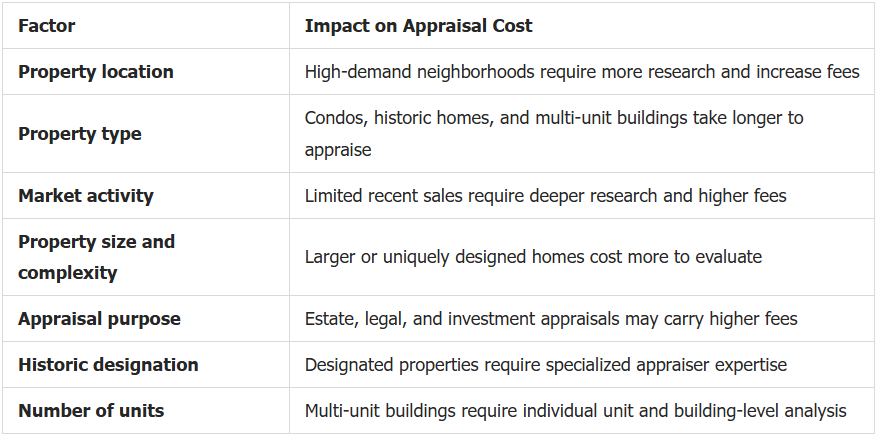
In San Francisco, the cost of a home appraisal typically ranges from $500 to $900 for standard residential properties. However, luxury homes, multi-unit buildings, and historic properties often exceed this range. Furthermore, appraisals in premium neighborhoods like Pacific Heights, Nob Hill, or the Marina District typically cost more due to the additional research required. Therefore, always request a detailed fee estimate from your appraiser before proceeding.
San Francisco Neighborhood Appraisal Guide for 2026
Different neighborhoods in San Francisco present unique appraisal challenges, cost ranges, and value drivers. Moreover, understanding your specific neighborhood’s characteristics helps you set realistic expectations before the process begins. Therefore, here is a practical overview of key San Francisco areas:
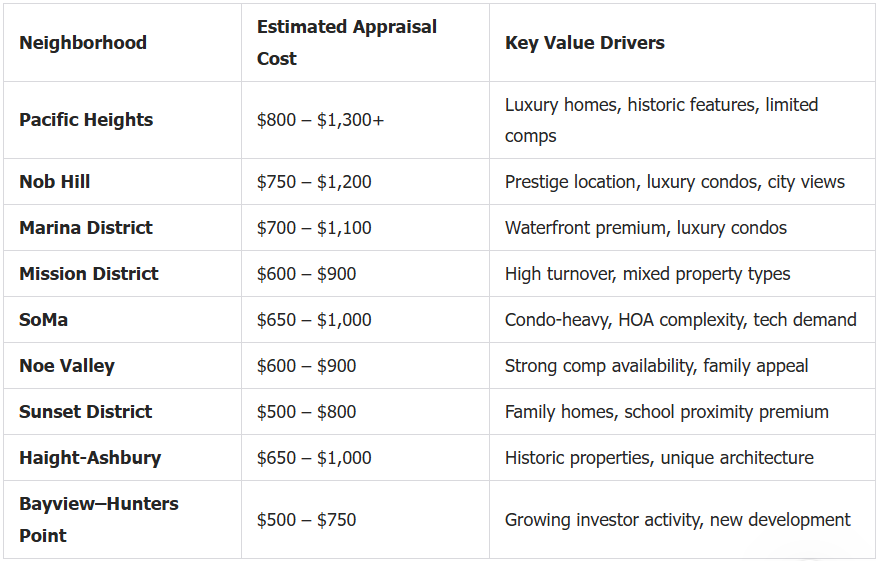
Moreover, these ranges are estimates and can vary based on the appraiser’s experience, current market conditions, and property-specific complexity. Furthermore, always confirm pricing directly with your chosen appraiser before scheduling. As a result, you avoid unexpected costs at a critical stage of your transaction.
How to Prepare for a San Francisco Home Appraisal
Proper preparation before your appraisal can make a meaningful and measurable difference in the final valuation. Moreover, appraisers form impressions quickly, so presenting your property in its best possible condition is essential. Therefore, follow these proven preparation steps before your appraiser arrives:
🧹 Clean and Declutter Every Room
A clean and well-organized home creates a strong and immediate positive impression. Moreover, clutter makes spaces appear smaller than they actually are, which can negatively influence the appraiser’s perception. Therefore, spend time decluttering every room, including storage areas, before the inspection date.
📋 Document All Recent Upgrades and Renovations
Prepare a detailed written list of every improvement made to the property. Furthermore, include the approximate cost and date of completion for each upgrade. Moreover, items such as new roofing, updated kitchens, energy-efficient windows, and bathroom renovations can all increase your appraised value significantly. Therefore, never assume the appraiser will notice every improvement without clear documentation.
🔑 Ensure Full and Easy Property Access
Provide clear access to all areas of the property, including basements, garages, attics, and storage spaces. Moreover, locked or inaccessible areas raise concerns and may negatively impact the appraisal outcome. Therefore, prepare all keys, access codes, and gate remotes well in advance of the inspection.
🌿 Improve Curb Appeal Before the Visit
First impressions begin at the curb. Moreover, simple improvements such as fresh landscaping, a clean driveway, and a freshly painted front door can positively influence the appraiser’s overall impression of the property. Therefore, invest a small amount of time and effort in exterior presentation before the inspection date.
⚡ Highlight Energy-Efficient and Smart Home Features
Energy-efficient upgrades and smart home technology are increasingly valued in the San Francisco real estate market in 2026. Furthermore, solar panels, smart thermostats, EV charging stations, and energy-efficient appliances can add measurable value to your appraisal. Therefore, document these features clearly and bring them to the appraiser’s attention during the inspection.
📊 Review Comparable Sales With Your Agent in Advance
Work with your San Francisco real estate agent to review recent comparable sales in your neighborhood before the appraisal takes place. Furthermore, understanding what similar homes have recently sold for helps you identify whether the appraiser’s selected comps are accurate and current. As a result, you are better prepared to request a formal Reconsideration of Value if necessary.
What Happens If Your San Francisco Appraisal Comes In Low?
A low appraisal is one of the most stressful situations in any San Francisco real estate transaction. However, it does not automatically mean the deal falls apart. Moreover, there are several effective strategies for addressing an appraisal that comes in below the agreed purchase price. Therefore, knowing your options in advance helps you respond quickly, calmly, and strategically.
Your available options include:
- 🤝 Renegotiate the purchase price with the seller based on the certified appraised value
- 💰 Cover the appraisal gap by increasing your down payment to bridge the difference
- 📋 Request a Reconsideration of Value if you believe the appraiser made errors or overlooked relevant comparable sales
- 🔍 Order a second independent appraisal for a fresh and unbiased perspective on the property’s value
- ❌ Exercise your appraisal contingency and walk away from the transaction if the gap cannot be resolved
Moreover, working with an experienced San Francisco real estate agent is absolutely essential when navigating a low appraisal situation. Furthermore, a skilled agent knows how to present additional comparable sales data to support a successful reconsideration request. As a result, many low appraisal situations are resolved without losing the deal entirely.
Working With a San Francisco Real Estate Agent Throughout the Appraisal Process
Partnering with a top real estate agent in San Francisco, CA simplifies every stage of the appraisal process significantly. Moreover, an experienced agent provides guidance that extends far beyond simply listing or searching for properties. Therefore, professional support during the appraisal process is one of the most valuable investments any buyer or seller can make in 2026.
A skilled San Francisco real estate agent can:
- ✅ Recommend the right time to schedule a pre-listing or independent appraisal
- ✅ Connect you with certified San Francisco appraisers who specialize in your neighborhood
- ✅ Review appraisal results carefully and identify any errors or omissions
- ✅ Develop a data-driven pricing strategy based on appraisal results and current market conditions
- ✅ Negotiate effectively with buyers, sellers, or lenders when appraisal issues arise
Moreover, with over 20 years of experience, Ms. San Francisco Real Estate ensures every client receives fair property valuations and the best possible results when buying or selling in 2026. Furthermore, her deep neighborhood knowledge and professional appraiser network give every client a measurable and lasting advantage. As a result, clients consistently achieve better outcomes than those who navigate the appraisal process without professional support.
Benefits of a Professional Home Appraisal in San Francisco
Investing in a professional San Francisco real estate appraisal delivers both immediate and long-term benefits. Moreover, these advantages extend across every type of real estate transaction and participant. Therefore, here is a comprehensive summary of what a professional appraisal provides:
- ✅ Establishes certified fair market value for buying, selling, or refinancing with confidence
- ✅ Supports competitive pricing for San Francisco homes for sale in any neighborhood
- ✅ Strengthens your position with lenders and investors during financing negotiations
- ✅ Provides legally recognized documentation for estate, trust, tax, and probate purposes
- ✅ Guides investment decisions for rental properties, multi-unit buildings, and second homes
- ✅ Prevents costly pricing mistakes that lead to extended time on the market
- ✅ Protects buyers from overpaying in a fast-moving and highly competitive market
Furthermore, homeowners who obtain regular appraisals maintain a clearer and more accurate picture of their total real estate wealth over time. Moreover, this clarity supports better long-term financial planning and strategic investment decisions. As a result, a professional appraisal is not just a one-time transaction requirement, it is a powerful and ongoing financial management tool.
Frequently Asked Questions: San Francisco Real Estate Appraisals in 2026
Do all homes in San Francisco require an appraisal? Not always. Appraisals are generally required when buying with mortgage financing, refinancing, or handling estate and legal matters. However, cash purchases may not require a lender-ordered appraisal. Moreover, independent appraisals are still strongly recommended even in cash transactions. Therefore, consult a licensed real estate agent in San Francisco, CA to determine exactly what your specific situation requires.
How much does a home appraisal cost in San Francisco, CA in 2026? Costs typically range from $500 to $900 for standard residential properties. Moreover, luxury homes, multi-unit buildings, and historic properties often cost more due to increased complexity. Furthermore, neighborhood location and appraisal purpose also influence the final fee significantly. Therefore, always request a detailed written estimate before committing to a specific appraiser.
Can I sell my home in San Francisco without an appraisal? Yes. However, a professional appraisal ensures your price is fair, competitive, and defensible in one of the most expensive markets in the country. Moreover, it protects you from undervaluing your property and leaving significant money on the table. Furthermore, sellers with certified appraisal data consistently negotiate from a much stronger position. As a result, the modest cost of an appraisal typically pays for itself many times over.
How do I find a certified home appraiser in San Francisco? Certified appraisers can be found through local real estate agencies, mortgage lenders, or direct referrals from trusted San Francisco realtors. Moreover, your real estate agent is often the fastest and most reliable source for qualified appraiser referrals. Furthermore, always verify that your chosen appraiser has specific experience in your neighborhood and property type. As a result, you receive the most accurate and useful valuation possible.
Will an appraisal affect my home’s sale price in San Francisco? Yes, significantly. An accurate appraisal helps you set a fair and competitive price that attracts serious buyers and maximizes your total sale value. Moreover, when the buyer’s lender appraisal aligns closely with your listing price, the transaction moves forward smoothly without financing complications. Furthermore, sellers who price based on professional appraisal data spend less time on the market. As a result, they consistently achieve stronger final sale prices than those who price without objective data.
How long does a San Francisco home appraisal take in 2026? The physical inspection typically takes between 30 minutes and 2 hours depending on the property’s size, type, and complexity. Moreover, the completed appraisal report is usually delivered within 3 to 7 business days after the inspection. However, complex luxury or multi-unit properties may take longer to complete. Therefore, factor this timeline carefully into your overall transaction planning to avoid unnecessary delays at closing.
Final Thoughts: Navigate San Francisco Real Estate Appraisals With Confidence in 2026
A San Francisco real estate appraisal is one of the most critical steps in any buying, selling, or investing transaction. Moreover, it protects every party involved from costly mistakes in one of the most expensive and competitive housing markets in the United States. Therefore, understanding the appraisal process thoroughly is essential knowledge for anyone participating in the San Francisco real estate market in 2026.
By understanding how appraisals work, preparing your property effectively, and working with an experienced San Francisco real estate agent, you ensure your property is accurately valued and perfectly positioned for success. Furthermore, every client of Ms. San Francisco Real Estate benefits from personalized guidance, certified appraiser connections, and data-driven strategies at every stage of the process. As a result, you navigate every appraisal challenge with complete confidence and achieve the best possible outcome.
Do Rental Properties Require Appraisals in San Francisco?

Do Rental Properties Require Appraisals in San Francisco?
Author: Ms. San Francisco Real Estate | Last Updated: May, 2026
If you own or are considering investing in San Francisco rental properties, one common question is whether these properties require appraisals. Understanding home appraisals in San Francisco, CA and their importance for rental and investment properties can help you make informed financial decisions.
Whether you’re an experienced landlord, a first-time investor, or planning to sell your house fast in San Francisco, CA, knowing when and why to get an appraisal is essential. Working with a licensed real estate agent in San Francisco, CA or a certified home appraiser can provide clarity on property valuation and potential rental income.
What Is a Property Appraisal?
A property appraisal in San Francisco, CA is a professional evaluation conducted by a certified appraiser to determine a property’s fair market value. While appraisals are commonly associated with home sales, they also apply to rental properties in certain circumstances.
Appraisals are typically required for:
- Mortgage refinancing
- Property sales or transfers
- Estate or probate settlements
- Property tax assessments
- Investment analysis for rental income potential
A San Francisco appraiser examines several factors when determining value:
- Comparable property sales in the neighborhood
- Property condition and upgrades
- Location and neighborhood demand
- Local San Francisco real estate market trends
- Size, type, and layout of the rental property
When Do Rental Properties Require Appraisals in San Francisco?
Not all rental properties require an appraisal, but there are situations where it is highly recommended.
1. Refinancing Rental Properties
When refinancing a rental property in San Francisco, lenders usually require an appraisal to determine the current market value. This appraisal helps lenders decide on your eligibility for a loan, the interest rate, and the maximum amount you can borrow. Essentially, it provides a clear picture of the property’s value, which is crucial for informed refinancing decisions.
2. Buying or Selling a Rental Property
If you are buying or selling a San Francisco investment property, an appraisal ensures a fair price. A certified appraiser can provide an accurate assessment, even for properties in unique neighborhoods or those with multiple units and other complex features. This guarantees that you are making informed decisions during the transaction.
3. Property Tax Assessment and Estate Planning
Professional appraisals are essential for estate planning, trust settlements, or tax purposes. A San Francisco property appraisal provides a documented value that can be used to meet legal and financial requirements.
4. Determining Rental Rates
Even if you are not selling or refinancing, appraisals help investors set competitive rental rates. Accurate valuations ensure that rents are competitive, maximizing returns without overpricing or underpricing your property. This is especially important for maintaining a strong return on investment.
Factors Affecting Appraisal Costs for Rental Properties
The cost of a home or rental property appraisal in San Francisco varies depending on several factors:
- Property location: High-demand or luxury neighborhoods may require more research, increasing costs.
- Property type: Multi-unit buildings, condos, or historic homes may take longer to appraise.
- Market activity: Limited comparable sales require appraisers to dig deeper for accurate valuations.
- Size and complexity: Larger or uniquely designed properties often cost more to evaluate.
On average, appraisals for San Francisco rental properties range from $500 to $900, with luxury or multi-unit properties costing more.
How a San Francisco Real Estate Agent Can Help
Partnering with a top real estate agent in San Francisco, CA, such as Ms. San Francisco Real Estate, can simplify the appraisal and property management process. Experienced agents assist with:
- Reviewing market trends for rental and investment properties
- Recommending when an appraisal is necessary
- Connecting clients with certified appraisers
- Developing pricing strategies for rental rates or property sales
- Negotiating with buyers, lenders, or investors
With over 20 years of experience, Ms. San Francisco Real Estate ensures your rental property appraisal in San Francisco, CA aligns with your financial and investment goals. Her expertise helps you get a fair price for your property and maximize your returns.
Benefits of Appraising Rental Properties
Getting an appraisal for your rental property offers multiple advantages:
- Provides an accurate market value for refinancing or selling
- Helps determine competitive rental rates
- Strengthens your position in negotiations with lenders or buyers
- Ensures compliance with estate, trust, or tax regulations
- Supports strategic planning for investment portfolios
Frequently Asked Questions
Do all rental properties in San Francisco require an appraisal?
Not always. Appraisals are usually needed for refinancing, selling, estate planning, or determining fair rental rates. Consult a San Francisco real estate agent to see if your property needs one.
How much does a rental property appraisal cost in San Francisco?
Typically, the cost ranges between $500 and $900, with higher prices for luxury or multi-unit properties.
Can I sell my rental property without an appraisal?
Yes, but a professional appraisal ensures you get a fair price, particularly in competitive neighborhoods.
How do I find a certified home appraiser in San Francisco?
Certified appraisers can be found through local real estate agencies, mortgage lenders, or recommendations from a trusted San Francisco real estate broker.
Will an appraisal affect my rental income?
Yes. Accurate appraisals help set competitive rental rates and maximize your ROI on San Francisco investment properties.
Conclusion
Not every San Francisco rental property requires an appraisal, but obtaining one can provide peace of mind, help maximize your investment, and ensure compliance with financial and legal requirements. Working with an experienced San Francisco real estate agent, like Ms. San Francisco Real Estate, can guide you through the appraisal process, determine the right rental rates, and keep you updated on market trends.
How Location Impacts Your San Francisco Home Appraisal Cost

How Location Impacts Your San Francisco Appraisal Cost
Author: Ms. San Francisco Real Estate | Last Updated: May, 2026
When homeowners ask, “How much does a home appraisal cost in San Francisco CA?” one of the biggest factors affecting the price is location. In a complex housing market like San Francisco, California, appraisal costs can vary depending on neighborhood demand, property type, and market activity.
Whether you are planning to sell your house fast in San Francisco CA, refinance your mortgage, or determine how much your San Francisco home is worth, understanding how location influences home appraisal San Francisco CA costs can help you prepare for the process.
Working with an experienced real estate agent in San Francisco, CA or a certified home appraiser in San Francisco can provide valuable insight into how property location affects valuation.
What Is a Home Appraisal?
A home appraisal in San Francisco CA is a professional evaluation of a property’s fair market value conducted by a licensed real estate appraiser.
Appraisals are commonly required for:
- Home purchases
- Mortgage refinancing
- Selling a property
- Probate or estate settlements
- Investment property analysis
A certified home appraiser in San Francisco evaluates multiple factors, including:
- Comparable home sales in the area
- Property condition and square footage
- Neighborhood demand
- Local San Francisco real estate market trends
- Home improvements and upgrades
If you’re wondering what your home is worth in San Francisco, getting an appraisal provides one of the most accurate estimates available.
Average San Francisco Home Appraisal Cost
The cost of a home appraisal in San Francisco typically ranges from $500 to $900.
In high-value neighborhoods or luxury markets, the appraisal may cost more because the appraiser must conduct more extensive research to determine the property’s true value.
Factors affecting appraisal pricing include:
- Property location
- Property size and complexity
- Type of appraisal (refinance, purchase, estate, etc.)
- Demand for appraisers in the local market
Why Location Matters in San Francisco Appraisals
Location is one of the most influential factors in determining both home value and appraisal cost in San Francisco CA.
Neighborhood Property Values
San Francisco has neighborhoods with dramatically different price ranges. In areas where homes sell for millions of dollars, appraisers must carefully study comparable sales and consider multiple factors affecting value.
High-value neighborhoods may result in slightly higher appraisal costs due to the extra research required.
Market Activity and Comparable Sales
In neighborhoods with frequent home sales, appraisers have ample comparable data to review.
In areas with rare or unique properties, appraisers may need to search for similar homes farther away or use older sales data. This added work can increase appraisal costs.
Property Type and Density
San Francisco is known for its diverse property types, including:
- San Francisco houses for sale
- San Francisco condos for sale
- Multi-unit investment properties
- Historic homes
Condominium appraisals often require reviewing building data, HOA financials, and comparable condo sales, adding complexity to the evaluation.
Accessibility and Property Inspection
Location can also affect inspection accessibility.
Homes located in dense urban neighborhoods, hillside areas, or historic districts may require additional time for inspection and research, which can impact the overall appraisal cost.
Why Homeowners Request a Pre-Listing Appraisal
Many homeowners in San Francisco request a pre-listing appraisal before selling their property. This can help determine:
- Accurate San Francisco CA home value
- Competitive listing price
- Buyer negotiation strategy
- Investment potential
An experienced San Francisco real estate agent can review appraisal data and develop the best pricing strategy for your property.
How Ms. San Francisco Real Estate Helps Homeowners
Working with a licensed real estate agent in San Francisco CA can make the appraisal and selling process much easier.
Ms. San Francisco Real Estate is a trusted San Francisco real estate agent with a proven track record, helping homeowners understand property value and navigate the local market.
Services include:
- San Francisco home buying and home selling guidance
- Property value analysis and pricing strategies
- San Francisco investment properties consultation
- San Francisco real estate loans and financing advice
- Marketing strategies for San Francisco homes for sale
As a top real estate agent in San Francisco CA, Ms. San Francisco Real Estate helps clients determine whether a home appraisal in San Francisco CA is necessary before listing their property.
Frequently Asked Questions
How much does a home appraisal cost in San Francisco CA?
Home appraisal costs in San Francisco typically range from $500 to $900, although luxury or complex properties may cost more.
What factors affect San Francisco appraisal costs?
Factors include property location, size, condition, available comparable sales, and the type of appraisal needed.
Can I sell my house in San Francisco without an appraisal?
Yes. Many homeowners work with an experienced San Francisco realtor who can estimate property value using market trends and comparable sales. A professional appraisal, however, adds confidence to your pricing.
How can I find a certified home appraiser in San Francisco?
Certified appraisers can be found through local appraisal companies, mortgage lenders, or recommendations from a San Francisco real estate broker.
How do I estimate my San Francisco home value?
You can estimate value by reviewing recent local sales, using online valuation tools, requesting a professional appraisal, or consulting a real estate agent in San Francisco, CA.
Should You Get an Independent Appraisal Before Selling in San Francisco?

Should You Get an Independent Appraisal Before Selling in San Francisco?
Author: Ms. San Francisco Real Estate | Last Updated: May, 2026
Selling a home in the competitive San Francisco real estate market requires the right pricing strategy from the very beginning. One question many homeowners ask is: Should you get an independent appraisal before selling your San Francisco home?
When selling a property, pricing it correctly is essential, especially in San Francisco, CA, where property values are high and housing inventory is limited. Understanding how a home appraisal works can help you make informed decisions, whether you are selling your home through a traditional listing or considering a quicker sale.
Working with a real estate agent in San Francisco, CA or the best real estate agent in San Francisco, CA can help you determine whether obtaining an independent appraisal is the right step before listing your property.
What Is an Independent Home Appraisal?
An independent home appraisal in San Francisco, CA is a professional evaluation of a property’s value. Unlike a lender-required appraisal, this type of appraisal is requested directly by the homeowner before listing the property for sale.
A certified home appraiser performs the evaluation to determine the property’s fair market value. This allows homeowners to understand the value of their property without a lender being involved.
A real estate appraisal in San Francisco, California typically evaluates several factors, including:
- Comparable home sales in the neighborhood
- Property condition and square footage
- Location and neighborhood demand
- Recent San Francisco CA real estate market trends
- Renovations or home improvements
If you are wondering how much your home in San Francisco is worth, obtaining an independent appraisal can provide a clear estimate before placing the property on the market. This helps homeowners better understand their San Francisco home value and make informed decisions.
Benefits of Getting a Pre-Listing Appraisal in San Francisco
In a high-value housing market like San Francisco, pricing a home correctly can make the difference between a quick sale and a listing that remains on the market for a long time.
1. Accurate Pricing Strategy
A professional home appraisal in San Francisco CA helps establish a realistic listing price based on current market data.
This can help sellers:
- Avoid overpricing their property
- Prevent undervaluing their home
- Attract serious buyers quickly
Accurate pricing is especially important in neighborhoods where San Francisco homes for sale often receive multiple offers.
- Stronger Negotiating Position
Most buyers will conduct their own appraisal through their lender when purchasing a property. If you already have a property appraisal for your San Francisco home, you will have reliable documentation supporting your asking price.
This can help prevent issues such as:
- Buyers negotiating the price downward
- Financing delays caused by low appraisals
- Disputes over the San Francisco property value
- Faster Home Sales
Many homeowners in San Francisco, CA want to sell their homes quickly, especially when relocating or managing an inherited property.
A pre-listing appraisal can help:
- Price the home competitively
- Attract qualified buyers quickly
- Reduce time on the market
If you are considering cash offers for San Francisco homes, knowing the true value of your property can help you evaluate whether investor offers are fair.
- Better Marketing Strategy
A knowledgeable San Francisco real estate agent can combine appraisal data with San Francisco real estate market trends to create a stronger marketing strategy.
This may include:
- Competitive listing prices
- Accurate property descriptions
- Targeted marketing for buyers searching for San Francisco houses for sale or San Francisco condos for sale
Situations Where a Pre-Listing Appraisal Is Most Helpful
Not every homeowner needs to obtain a property appraisal before selling. However, there are certain situations where it can be very beneficial.
You may want an appraisal if you are:
- Selling a high-value luxury home
- Selling an inherited property
- Listing a unique or uncommon property
- Selling an investment property
- Pricing a home in a rapidly changing market
Working with a certified home appraiser in San Francisco, CA can provide a detailed report that reflects the property’s true market value.
When an Appraisal May Not Be Necessary
In many cases, an experienced San Francisco real estate agent can estimate a property’s value by reviewing comparable sales and analyzing local market data.
A San Francisco real estate agent who knows the market can often provide accurate pricing guidance without requiring a separate appraisal.
However, some homeowners still prefer to obtain a professional appraisal for added confidence when setting their listing price.
How a San Francisco Real Estate Agent Helps With Pricing
A licensed real estate agent in San Francisco, CA plays an important role in helping homeowners determine the correct listing price.
An experienced San Francisco real estate broker can assist with:
- Reviewing comparable home sales
- Analyzing San Francisco real estate trends
- Preparing pricing strategies
- Identifying improvements that increase home value
- Negotiating with buyers and lenders
Working with a top real estate agent in San Francisco, CA ensures that your property is priced competitively while maximizing its value.
Why Work With Ms. San Francisco Real Estate
Selling a home in San Francisco requires strong market knowledge and effective negotiation skills.
Ms. San Francisco Real Estate is a San Francisco real estate agent with over 20 years of experience and a strong reputation for helping clients successfully buy and sell homes.
Services include:
- San Francisco home buying and home selling guidance
- Property value analysis and home pricing
- Investment property consultation
- San Francisco real estate loans and financing guidance
- Marketing strategies for San Francisco homes for sale
Frequently Asked Questions (FAQs)
Should I get a home appraisal before selling in San Francisco?
Getting a home appraisal before listing your property can help you understand its market value and set an accurate price. It can also strengthen your position during negotiations with buyers.
How much does a home appraisal cost in San Francisco?
The San Francisco home appraisal cost typically ranges between $500 and $900, depending on the property size, location, and complexity of the evaluation.
Can I sell my San Francisco home without an appraisal?
Yes. Many homeowners sell their properties without a pre-listing appraisal by working with an experienced San Francisco realtor who can estimate the property’s value using local market data.
How do I estimate my San Francisco home value?
You can estimate your San Francisco home value by reviewing recent comparable home sales in the area, using online valuation tools, or requesting a professional home appraisal in San Francisco, CA.
Will buyers still order their own appraisal?
If the buyer is using mortgage financing, the lender will usually require a mortgage appraisal to confirm the property’s market value. This ensures the lender is not approving a loan that exceeds the property’s actual value.
Do All San Francisco Homes Require Appraisals?

Do All San Francisco Homes Require Appraisals?
Author: Ms. San Francisco Real Estate | Last Updated: May, 2026
The San Francisco real estate market is known for its competitive pricing, limited inventory, and high property values. Whether you are buying, selling, refinancing, or considering a cash offer, one common question homeowners ask is: Do all San Francisco homes require appraisals?
When buying or selling a home in San Francisco, it is important to understand the role of a home appraisal. This is especially true if you are working with a real estate agent or trying to find the best real estate agent in San Francisco to guide you through the process. A home appraisal can significantly impact a real estate transaction, so knowing when it is required can help buyers, sellers, and investors make informed decisions.
What Is a Home Appraisal?
A home appraisal is a professional evaluation of a property’s market value conducted by a certified home appraiser. Lenders typically require an appraisal to ensure the property’s value supports the loan amount they are approving. This process protects both the buyer and the lender by confirming that the property is worth the agreed purchase price.
An appraisal determines the market value of a San Francisco home based on several factors, including:
- Comparable sales in the neighborhood
- Property size and overall condition
- Location and neighborhood demand
- Current San Francisco real estate market trends
- Property upgrades and improvements
For homeowners wondering how much their San Francisco home is worth, an appraisal provides a reliable and accurate estimate of the property’s value.
When Are Home Appraisals Required in San Francisco?
Not every real estate transaction requires an appraisal. However, appraisals are commonly required in the following situations.
- When Buying a Home With a Mortgage
When purchasing a home with a mortgage, lenders typically require a property appraisal before approving the loan. The purpose of the appraisal is to verify that the property’s value matches the loan amount being requested.
If the appraisal value is lower than the purchase price, it can affect the financing process and may require the buyer and seller to renegotiate the price.
Buyers searching for San Francisco homes for sale or San Francisco houses for sale should expect an appraisal if they plan to finance the purchase through a lender.
- When Refinancing a Property
Homeowners who refinance their mortgage may also be required to obtain a new home appraisal. Lenders request an updated valuation to confirm the current market value of the property.
This helps ensure that the home’s value is sufficient to support the new loan terms and refinancing agreement.
- When Required for Legal or Financial Situations
Home appraisals may also be required for legal or financial matters such as:
- Divorce property division
- Estate settlements
- Probate cases
- Trust transfers
- Property tax assessments
In these cases, a licensed real estate appraiser determines the fair market value of the property.
When a San Francisco Home Appraisal May Not Be Required
In some situations, a home appraisal may not be necessary.
- Cash Home Purchases
If a buyer purchases a property with cash, there is no lender involved in the transaction. As a result, a home appraisal may not be required.
Many cash buyers choose to skip the appraisal process in order to close the transaction faster. This situation often occurs when homeowners want to sell their house quickly, accept a cash offer, or sell the property as-is without making repairs.
- Direct Home Buyers and Real Estate Investors
Some real estate investors in San Francisco make purchase offers based on market data and property analysis rather than formal appraisals.
Companies that advertise services such as buying houses directly often rely on automated property valuation systems to estimate a home’s value quickly.
- Certain Loan Programs
In some refinancing situations, lenders may use automated valuation models instead of requiring a full appraisal.
However, this depends on the specific loan program and the lender’s requirements.
Why Appraisals Matter in the San Francisco Real Estate Market
In a high-value market like San Francisco, accurate pricing is extremely important. A home appraisal helps establish a reliable market value and protects both buyers and lenders.
A home appraisal helps:
- Confirm fair market value
- Protect buyers from overpaying
- Reduce financial risk for lenders
- Provide reliable property value estimates
For homeowners trying to determine how much their house is worth in San Francisco, an appraisal can also help establish a competitive listing price.
Working with a San Francisco real estate agent who understands the local market can further improve pricing accuracy and ensure a smoother transaction.
How a Real Estate Agent Helps With Appraisals
An experienced real estate agent in San Francisco can guide homeowners through the appraisal process and help prepare the property for valuation.
A top real estate agent in San Francisco can assist with:
- Reviewing comparable home sales
- Developing accurate pricing strategies
- Identifying property improvements that may increase value
- Negotiating if an appraisal comes in lower than expected
This is why many buyers and sellers choose to work with a licensed real estate agent who understands the San Francisco housing market.
Why Work With Ms. San Francisco Real Estate
Buying or selling a home in San Francisco requires experience, local knowledge, and strong negotiation skills.
Ms. San Francisco Real Estate is a trusted real estate professional with a proven track record of helping clients successfully navigate the local housing market.
Services include:
- San Francisco home buying guidance
- San Francisco home selling strategies
- Property value analysis and home pricing
- Investment property consultation
- Assistance with real estate loans and financing
Frequently Asked Questions (FAQs)
Do all homes in San Francisco require an appraisal?
No. Appraisals are typically required when a buyer is using mortgage financing. However, cash purchases or certain investment transactions may not require a formal appraisal.
How much does a home appraisal cost in San Francisco?
The cost of a home appraisal in San Francisco typically ranges between $500 and $900, depending on the property type, size, and complexity of the evaluation.
Can I sell my San Francisco home without an appraisal?
Yes. If you receive a cash offer for your home, an appraisal may not be necessary because there is no lender involved in the transaction.
How do I estimate my San Francisco home value?
Homeowners can estimate their property value by reviewing comparable sales, using online valuation tools, or requesting a professional home appraisal in San Francisco.
Should I get a pre-listing appraisal before selling?
A pre-listing appraisal can help sellers determine an accurate listing price, attract serious buyers, and reduce the chances of pricing issues during the selling process.
Can AI Predict San Francisco Home Price Trends in 2026?

Can AI Predict San Francisco Home Price Trends in 2026?
Author: Ms. San Francisco Real Estate | Last Updated: May, 2026
The real estate market in San Francisco has long been one of the most dynamic housing markets in the United States. With rising property values, strong demand, and limited inventory, both buyers and sellers are constantly looking for better ways to understand future trends.
Today, artificial intelligence (AI) is beginning to play a major role in real estate forecasting. From analyzing home value data to predicting market shifts, AI tools are helping buyers, sellers, and investors make more informed decisions.
If you are working with a real estate agent in San Francisco or searching for the best real estate agent in San Francisco, understanding how AI predicts market trends can help you stay ahead in 2026.
How AI Is Changing the San Francisco Real Estate Market
Artificial intelligence is transforming how real estate professionals analyze data and predict housing market movements. In a competitive market like San Francisco real estate, AI systems can process thousands of data points within seconds.
These systems typically analyze:
- Historical home prices
- Current San Francisco real estate market trends
- Interest rates and mortgage activity
- Neighborhood demand and population changes
- Recent San Francisco home sales
- Property inventory and new listings
For buyers searching for San Francisco homes for sale or sellers who want to know how much their San Francisco home is worth, AI-driven analytics provide valuable insights that were previously difficult to obtain.
AI and Home Value Predictions
Many homeowners in San Francisco ask questions such as:
- How much is my house worth in San Francisco, CA?
- What is my San Francisco home value estimate?
- What is the market value of my San Francisco home?
AI-powered property valuation tools combine large real estate datasets with predictive algorithms to estimate San Francisco property values.
These tools often analyze:
- Comparable home sales (comps)
- Neighborhood appreciation trends
- Property characteristics
- Local economic indicators
While AI can provide useful estimates, it is still important to consult a professional home appraiser in San Francisco or an experienced real estate broker in San Francisco who understands the local market. Their expertise helps ensure accurate pricing.
San Francisco Housing Market Forecast for 2026
Experts believe that several key factors will influence the San Francisco housing market forecast for 2026.
1. Limited Housing Supply
Housing inventory in San Francisco remains limited. Low supply often supports higher property values and increases competition among buyers.
2. Strong Tech Industry Influence
The technology sector continues to drive housing demand across the Bay Area, attracting professionals who want to live close to major tech companies.
3. Rising Demand for Condos and Urban Living
Many buyers are searching for San Francisco condos for sale and modern city living options close to work, restaurants, and public transportation.
4. AI-Driven Market Analysis
Real estate professionals are increasingly using AI to identify emerging neighborhoods, pricing opportunities, and buyer demand faster than traditional methods.
Working with a top real estate agent in San Francisco who understands both technology and the local market can help buyers and sellers make smarter decisions.
Neighborhoods to Watch in 2026
Several neighborhoods in San Francisco are expected to see strong housing demand due to amenities, lifestyle appeal, and transportation access.
Popular areas include:
- Mission District
- Noe Valley
- Sunset District
- Pacific Heights
- South of Market
These neighborhoods attract buyers searching for San Francisco houses for sale, San Francisco condos, and investment properties in San Francisco.
AI Tools for Buyers and Sellers
Artificial intelligence is becoming a valuable resource for both home buyers and sellers.
AI Benefits for Home Buyers
AI tools can help buyers identify:
- The best neighborhoods for investment
- Future price increases
- Market demand trends
- Mortgage affordability estimates
These insights are especially helpful for buyers searching for San Francisco homes for sale or working with a licensed real estate agent in San Francisco.
AI Benefits for Home Sellers
AI tools can help sellers:
- Determine the best listing price
- Identify the best time to sell
- Estimate San Francisco home value
- Analyze buyer demand in specific neighborhoods
Sellers who want to sell their house fast in San Francisco or receive a cash offer for their San Francisco home can also benefit from these predictive insights.
Why Human Expertise Still Matters
Although AI provides powerful forecasting tools, it cannot replace the experience of a seasoned San Francisco real estate agent.
Real estate professionals offer critical advantages such as:
- Deep local market expertise
- Strong negotiation skills
- Pricing strategies based on real-time data
- Professional marketing exposure
- Access to buyer networks and investors
An experienced realtor in San Francisco understands neighborhood trends, buyer behavior, and pricing strategies that algorithms cannot fully capture.
Why Work with Ms. San Francisco Real Estate
When buying or selling property in San Francisco, working with a knowledgeable local expert can make a significant difference.
Ms. San Francisco Real Estate offers:
- Extensive knowledge of the San Francisco real estate market
- Professional guidance for San Francisco home buying and home selling
- Advice on San Francisco real estate loans and financing options
- Strategies to sell homes quickly or maximize property value
- Access to buyers, investors, and local market insights
As a San Francisco real estate agent who knows the market, Ms. San Francisco Real Estate focuses on making every transaction smooth and successful.
Frequently Asked Questions (FAQs)
Can AI accurately predict San Francisco home prices?
AI can analyze large amounts of housing data and identify patterns that help forecast price trends. However, the expertise of a real estate agent in San Francisco is still essential for accurate pricing.
Will San Francisco home prices rise in 2026?
Many experts expect moderate price growth due to limited housing supply, strong demand, and continued economic activity in the Bay Area.
How can I find the best real estate agent in San Francisco, CA?
Look for an experienced San Francisco real estate agent with a proven track record, strong client reviews, and deep knowledge of local neighborhoods.
How do I estimate my San Francisco home value?
Homeowners can use online valuation tools, review comparable home sales, or request a home appraisal in San Francisco to determine the market value of their property.
Should I sell my San Francisco home in 2026?
If demand remains strong and inventory stays limited, 2026 may be a good time to sell. Consulting with a top real estate agent in San Francisco can help you determine the best timing and pricing strategy.
